Dimraeth builds combine a race/class archetype, attribute choices, skill-tree paths, equipped spells and gear. You can equip five spells at once. A useful starting point is to check how your chosen spells meet their learning requirements, spend combat resources and interact with your equipment.
Early Access systems checked September 16, 2026. Creator examples below describe the September 15 video; they are not tested best-build recommendations or guarantees for later patches.
On this page ⌄
The parts of a build
| Layer | What to check |
|---|---|
| Race and class | The pairing determines the archetype and its skill-tree options. |
| Attributes | Universal spellbooks require particular attributes before they can be learned. |
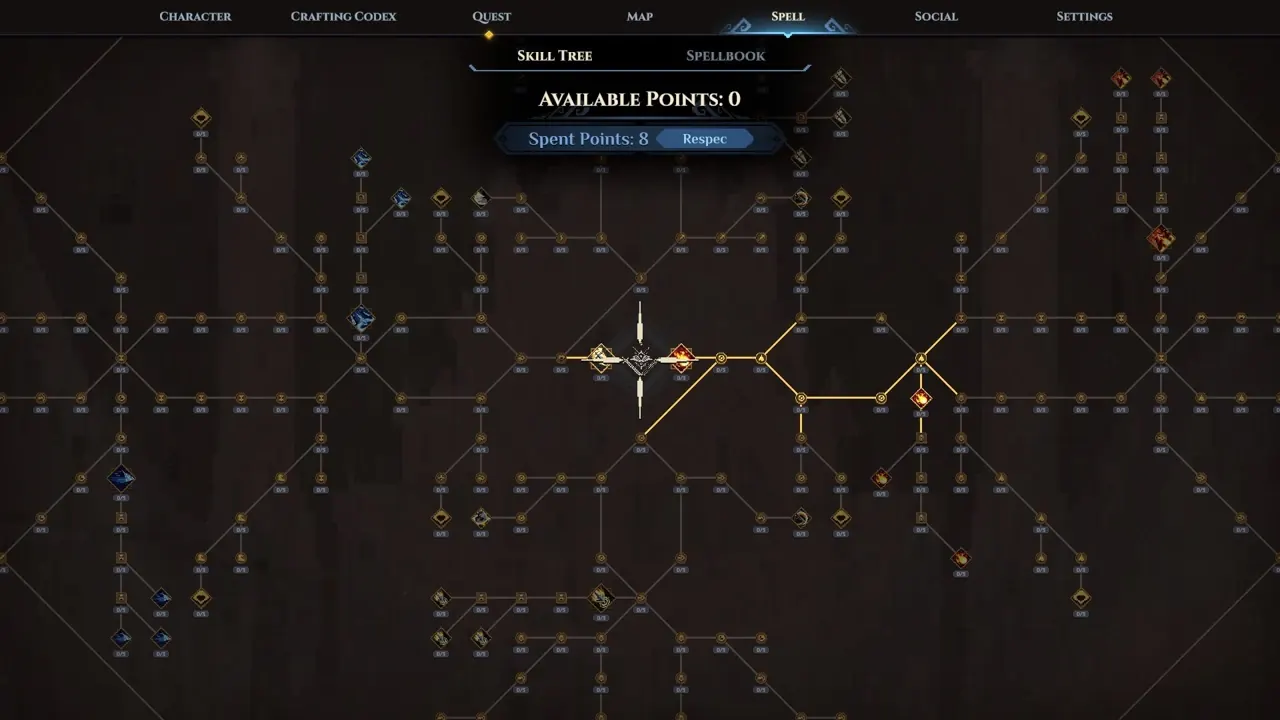
| Skill tree | Paths supply stats, passives and spell options; inspect the selected branch rather than only its endpoint. |
| Equipped spells | Five slots mean choosing a usable combination rather than equipping every learned spell. |
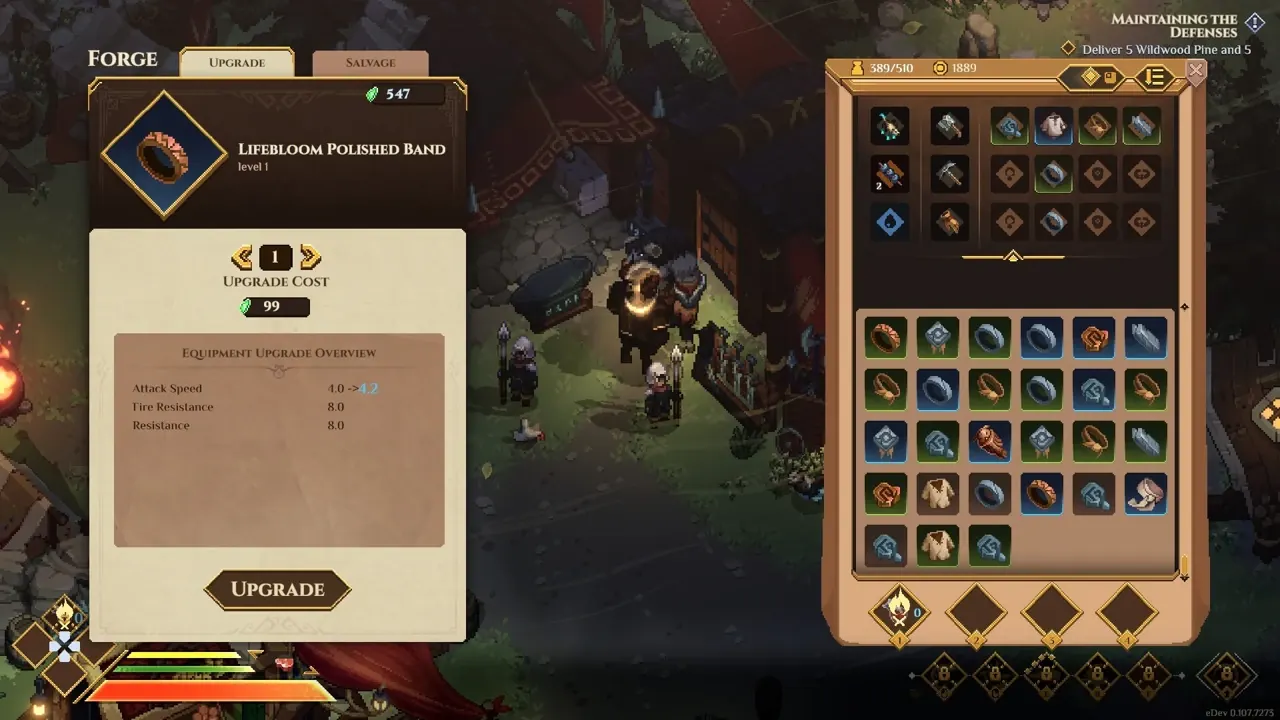
| Equipment | Compare the gear’s stats and set effects with what your spells actually do. |
| Food and potions | Preparation can support your resources; the crafting page separates the older design descriptions from launch claims. |
Race, class and archetype trees
The prelaunch r/dimraeth design discussion describes three contributing parts: a race tree, a class tree and a smaller specialization or archetype tree. It describes stat nodes, passives and spell nodes with their own modifier paths. These explain why two characters can diverge even when some of their initial choices match.
[2]Treat the post’s approximate node counts as a description of that design snapshot, not a required allocation plan for every patch. The official launch level cap is 25, and the launch announcement identifies a skill-tree overhaul. The size of a board does not tell you how many of its nodes a launch character can unlock.
[2][5]Read requirements and costs separately
Steam confirms that spells come from race/class choices and crafted universal spellbooks, with attribute requirements on the latter. Learning a spell and being able to sustain it in combat are separate checks.
[1]- Check the spellbook’s attribute requirements first. A promising effect is not immediately usable if the character does not meet them.
- Read the combat costs. In Larry Puss’s September 15 explanation, some spells consume stamina, some concentration, and some both.
- Read the cooldown separately from the item’s weight and gold value. In the video, the creator points out that similar-looking UI symbols can be confused.
- Compare that cost and cooldown with the other four equipped slots before building a rotation around it.
At 00:48–04:24, the creator uses Frozen Strike and other tooltips to explain these distinctions. Damage and costs shown in those tooltips belong to his character and version.
[3]Use the Codex to follow a synergy
A useful worked example appears at 04:26–06:18 of the same video: the creator searches the Codex for Temporal Surge, then shows Echo of Mutilation converting that buff into Double Strike. Follow which effect supplies the buff, which one converts it, and what the conversion produces.
[3]- Find the exact effect named by a spell or passive in the Codex.
- Check whether another selected effect produces, consumes or converts its stacks.
- Read the condition that triggers the conversion. A stack-consuming choice needs a way to supply those stacks.
- Keep the observed combination scoped to the character and version shown; do not assume it works on every race/class tree.
The video demonstrates the interaction on that character; it does not compare its damage against all other available builds.
[3]Check set bonuses and their listed sources
At 09:38–10:52, Larry Puss shows equipment sets in the Codex, including their bonuses and listed enemy sources. That provides a more specific starting point than assuming every set is equally likely to appear from any enemy. It does not establish a guaranteed drop rate.
[3]His Convergence example lists Dryads and Wildwood Wolf for much of that set. Read the entries in your own version before choosing a farming target; the example is from that video, and the creator says he had not yet finished the available Early Access content.
[3]Set effects can add stats, alter spell behavior or supply abilities in the creator’s examples. Match the actual effect to the spells you have selected rather than judging a set by its name alone.
[3]